
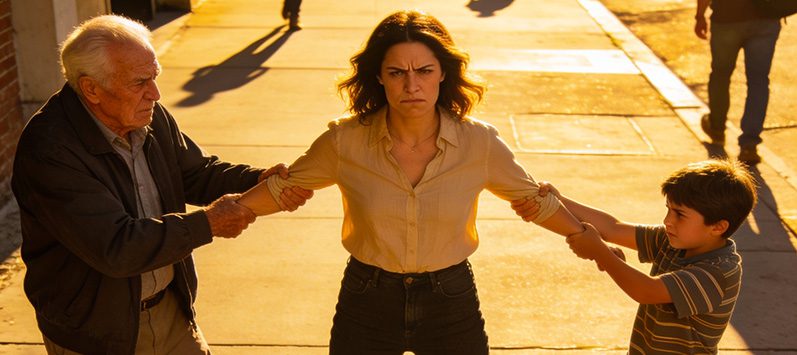
The Sandwich Generation — adults balancing care for both their children and aging parents — isn’t just a label. It’s an everyday grind that stretches across carpools, medical paperwork, after-hours Zoom calls, and late-night pharmacy runs. You’re planning next week’s meals while waiting for a doctor’s callback and muting your kid’s meltdown during a conference call. These aren’t isolated moments. They stack. They bleed into one another. And they reshape how you think, move, decide, and endure.
Coordinating Moving Pieces That Don’t Stop Moving
When your kid’s teacher calls the same week your father’s physical therapist changes schedules, there’s no smooth handoff, just triage. Managing two distinct care rhythms means you’re constantly toggling between systems that weren’t built to connect. You need something better than memory and color-coded Post-its. Some families find relief in dedicated scheduling apps, not because they eliminate conflict, but because they reduce the volume of repeated questions and missed handoffs. This kind of orchestration isn’t glamorous, but it keeps breakdowns from becoming disasters. Over time, it becomes its own invisible labor, just part of your wiring.
Centralizing the Chaos
You may not know where the dental coverage policy is, but when it’s suddenly needed at 9 p.m., you’ll wish you did. The same goes for your mom’s DNR, your son’s IEP, and that random tax document your dad saved in three places. Many people hit a breaking point when document overload becomes a true liability. That’s why digital consolidation stops being optional. Saving everything as a PDF keeps formatting stable and opens fast across devices; no accidental edits, no syncing weirdness. This may help: using a PDF merging tool to group key records into one file makes it easier to retrieve what matters without sorting through chaos.
Too Many Decisions, Not Enough Clarity
Nobody tells you that the hardest part isn’t the workload, it’s the guessing. Will your mother’s condition stabilize or nosedive in two months? Will your child need another evaluation next year? Most of your plans are built on sand. Over time, mental drag from constant decisions eats at your ability to weigh options clearly. Your brain doesn’t stop working — it just works differently. You start defaulting to what feels familiar, even if it’s not best. That isn’t laziness. That’s a system under load, and it changes how you navigate both major and mundane choices.
What Flexibility Really Looks Like at Work
It’s easy to say “just ask for flexibility” when your day is squeezed from both sides. But flexibility doesn’t mean slashing your hours or apologizing for every early dismissal. It means reshaping the actual expectations that define your job, not just when you log on. When your caregiving duties create unpredictability, you need more than a sympathetic boss. You need a flexible work setup that reduces conflict between what your home life demands and what your role assumes. That might mean shared-role coverage, staggered start times, or a results-based workload. You’re not asking for favors. You’re asking for alignment.
Switching Emotional Channels at Full Volume
You go from explaining new medication side effects to your dad to decoding your daughter’s panic about next year’s science class, all before dinner. Navigating identity whiplash can scramble your emotional system. Each relationship asks something different from you, and there’s rarely time to recalibrate between them. This isn’t about being “resilient.” It’s about the cost of emotional availability. You don’t get to shut down or shift gears cleanly, and that friction adds up. Learning to compartmentalize isn’t selfish, it’s a type of preservation. And naming that cost makes it easier to adjust, even if you can’t fully escape it.
Planning for Futures That Won’t Commit
Everyone tells you to prepare—for college, for long-term care, for sudden emergencies—but none of those timelines feel real. You’re asked to make plans without dates, decisions without data. Trying to build structure in that fog is draining. What helps isn’t certainty, but process. Developing a flexible mindset that allows you to easily adapt when timelines stay unclear lets you map out possible turns without locking yourself into only one. It’s not about predicting. It’s about reducing emotional whiplash when the unpredictable arrives. And the more scenarios you sketch, the less fragile your long-term plans feel when the landscape shifts again.
You won’t find a clean closure in this kind of life. But you do start to build muscle, not in strength, but in pacing. The Sandwich Generation doesn’t operate on wins or resolutions. It moves through responsiveness, adapts in increments, and reshapes what competence looks like. The logistics evolve. So does the emotional math. What doesn’t change is the sheer volume of movement beneath the surface. And if nothing else, that deserves to be seen not just as stress, but as skill; skill sharpened under pressure few others can name.